Coconut water has been consumed for centuries in tropical regions where coconut palms grow abundantly, such as Southeast Asia, the Pacific Islands, and the Caribbean.
Historically, coconut water was used not only as a source of hydration but also as a treatment for dehydration, diarrhea, and other health issues due to its electrolyte-rich composition.
Nutritional Composition:
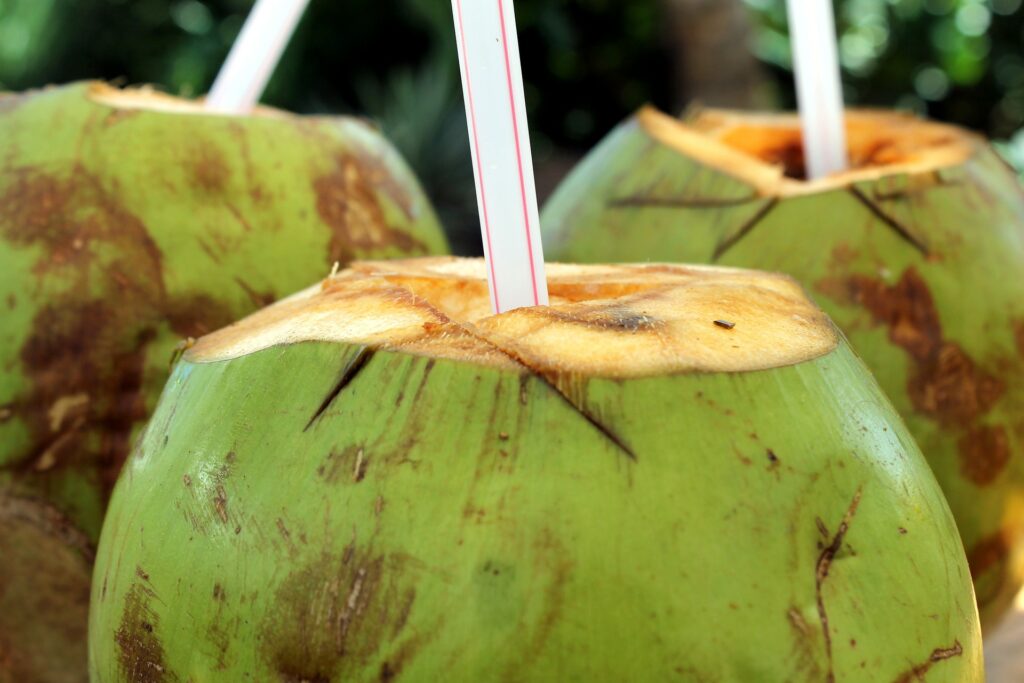
Coconut water is the clear liquid found inside young, green coconuts. It is different from coconut milk, which is made from the grated flesh of mature coconuts.
Coconut water is low in calories and fat-free, making it a popular choice for those seeking a healthy, hydrating beverage.
It is naturally rich in electrolytes, such as potassium, sodium, magnesium, and calcium, which are essential for maintaining proper fluid balance, muscle function, and nerve signaling in the body.
Coconut water also contains small amounts of vitamins, minerals, and antioxidants, including vitamin C, B vitamins, and amino acids.
Electrolyte Balance: The electrolytes found in coconut water, particularly potassium and sodium, help regulate fluid balance in the body, support muscle function, and prevent dehydration.
Nutrient Boost: Coconut water provides small amounts of vitamins, minerals, and antioxidants, which may contribute to overall health and well-being.
Modern Popularity:
In recent years, coconut water has gained popularity as a trendy beverage in health and wellness circles, marketed as a natural, hydrating, and nutrient-rich alternative to sugary sodas and sports drinks.
Here in Belize, you will find it in gas stations, and roadside stalls selling it in bottles and/or the coconut itself.