Now Reading: The Mysterious Blue Hole
-
01
The Mysterious Blue Hole
The Mysterious Blue Hole
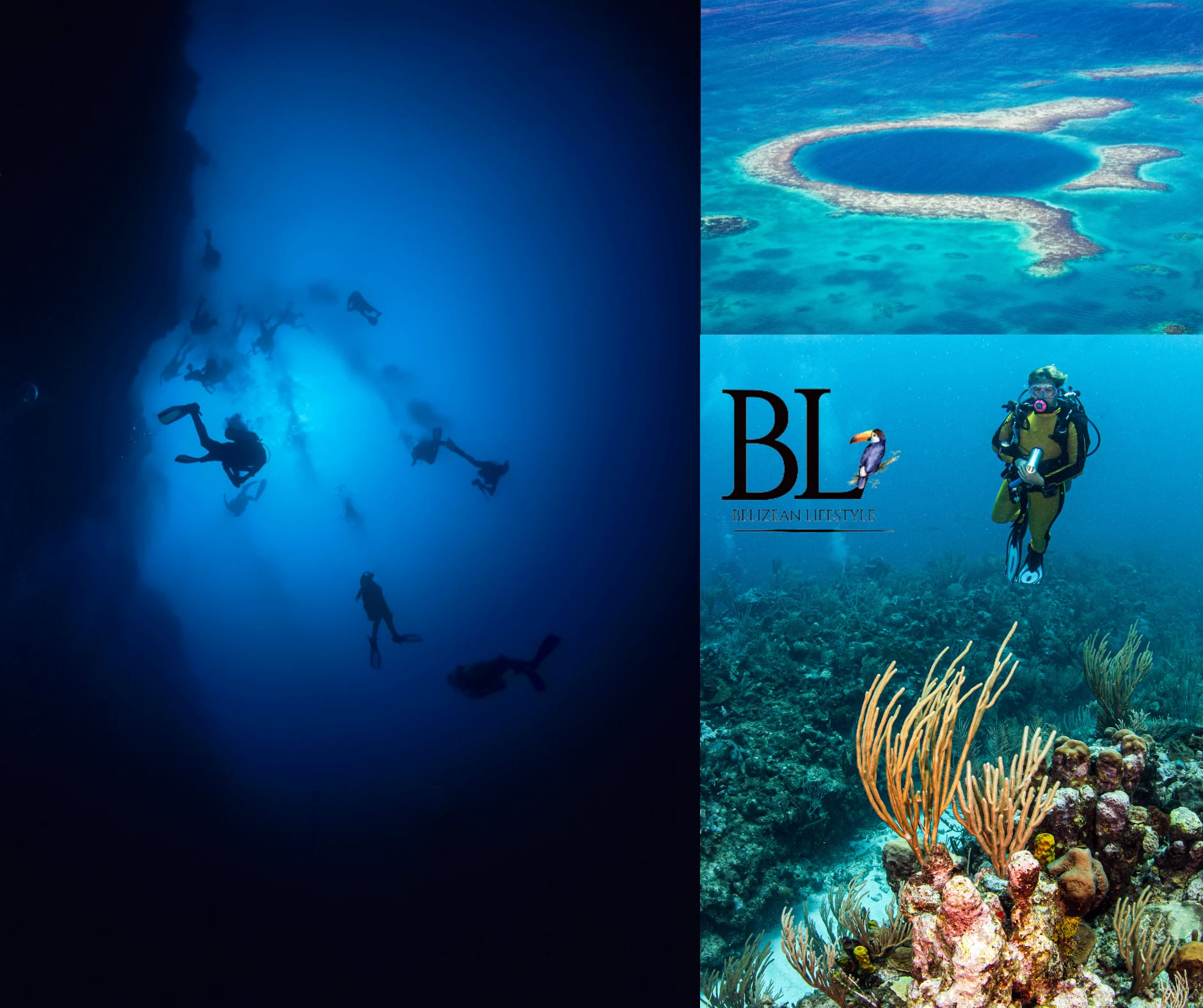
The Great Blue Hole is a massive underwater sinkhole located off the coast of Belize, near the center of Lighthouse Reef, about 70 km (43 miles) from the mainland. It is part of the Belize Barrier Reef Reserve System, a UNESCO World Heritage Site. The hole is circular, over 300 meters (984 feet) across and 125 meters (410 feet) deep, making it one of the largest sinkholes of its kind in the world.
How the Blue Hole Was Formed
The Great Blue Hole was formed during several episodes of the Quaternary glaciation, when sea levels were much lower. Here’s how it happened:
1. Original Formation as a Limestone Cave – Around 153,000 years ago, during the last Ice Age, the area was a dry limestone cave system.
2. Collapse Due to Rising Sea Levels – As the Ice Age ended, glaciers melted, and sea levels rose, flooding the cave. The roof eventually collapsed, forming a vertical cave or sinkhole.
3. Present-Day Structure – The hole is now submerged, with its walls featuring stalactites and stalagmites that formed when it was still a dry cave.
Discovery & Exploration
The Blue Hole gained international fame thanks to Jacques Cousteau, the French explorer, who declared it one of the top diving sites in the world in 1971. He brought his ship, the Calypso, to explore its depths and confirmed its origin as a flooded cave system.
Richard Branson’s Expedition (2018)
In December 2018, billionaire adventurer Richard Branson and ocean conservationist Fabien Cousteau (grandson of Jacques Cousteau) led a high-profile expedition to map the Blue Hole in detail. They partnered with Aquatica Submarines and the Belizean government to conduct the first full 3D sonar mapping of the hole.
Key Findings from Branson’s Dive:
– Stalactites Confirmed – The team found massive mineral formations (stalactites) at around 120 feet (37 meters) deep, proving the hole was once a dry cave.
– Hydrogen Sulfide Layer – Below 300 feet (90 meters), the water becomes anoxic (lacking oxygen), meaning no marine life survives at that depth.
– Plastic Pollution – Shockingly, they discovered plastic bottles at the bottom, highlighting ocean pollution issues.
– “Conical” Shape – The hole narrows as it goes deeper, forming a cone-like structure.
What People Believe About the Blue Hole
1. Mayan Connection – Some believe the ancient Maya considered it a sacred site, though no direct evidence supports this.
2. Mysterious Disappearances – Due to its depth and strong currents, divers have occasionally gone missing, fueling myths of it being a “bottomless pit.”
3. Alien or Bermuda Triangle Theories – Some conspiracy theorists link it to the Bermuda Triangle, though scientists dismiss such claims.
Diving & Tourism
– The Blue Hole is a bucket-list destination for scuba divers, though it’s considered advanced-level diving due to its depth.
– Divers can see reef sharks, giant groupers, and midnight parrotfish near the surface.
– The best time to visit is April–June, when waters are calm and visibility is high (up to 60 meters/200 feet).
Scientific Importance
– The Blue Hole helps scientists study climate change by analyzing its mineral deposits (stalactites), which hold records of past rainfall and temperature changes.
– It also provides insight into marine geology and how underwater caves form.
The Great Blue Hole remains one of the most fascinating natural wonders on Earth—a geological masterpiece shaped by Ice Age forces, explored by legendary figures like Cousteau and Branson, and a magnet for divers and scientists alike. Despite its beauty, it also serves as a reminder of human impact on the oceans, with plastic waste even reaching its deepest corners.
Just another on Belize’s Natural Wonders!
Related Posts

Stay Informed With the Latest & Most Important News
Previous Post
Next Post